> ## Documentation Index
> Fetch the complete documentation index at: https://www.integrate.io/docs/llms.txt
> Use this file to discover all available pages before exploring further.
# ETL: Connecting to Microsoft SQL Server
> Connect Microsoft SQL Server to Integrate.io ETL for reading and writing data. Configure firewall rules, credentials, and connection settings.
* Create a user and grant it minimum permissions required for Integrate.io ETL to read or write data from the database.
* Allow access from [Integrate.io ETL's IP addresses](/docs/etl/integrateio-etls-ip-list/) to your SQL Server database port (Refer to [this](/docs/etl/allowing-integrateio-etl-access-to-my-server-behind-a-firewall/) article if you'd prefer to create an SSH tunnel or reverse SSH tunnel.) Note: We only support **"Default"** [connection policy](https://docs.microsoft.com/en-us/azure/azure-sql/database/connectivity-settings?view=azuresql\&tabs=azure-portal#change-the-connection-policy) on Azure SQL/Synapse Analytics.
## To create a Microsoft SQL Server database connection in Integrate.io ETL
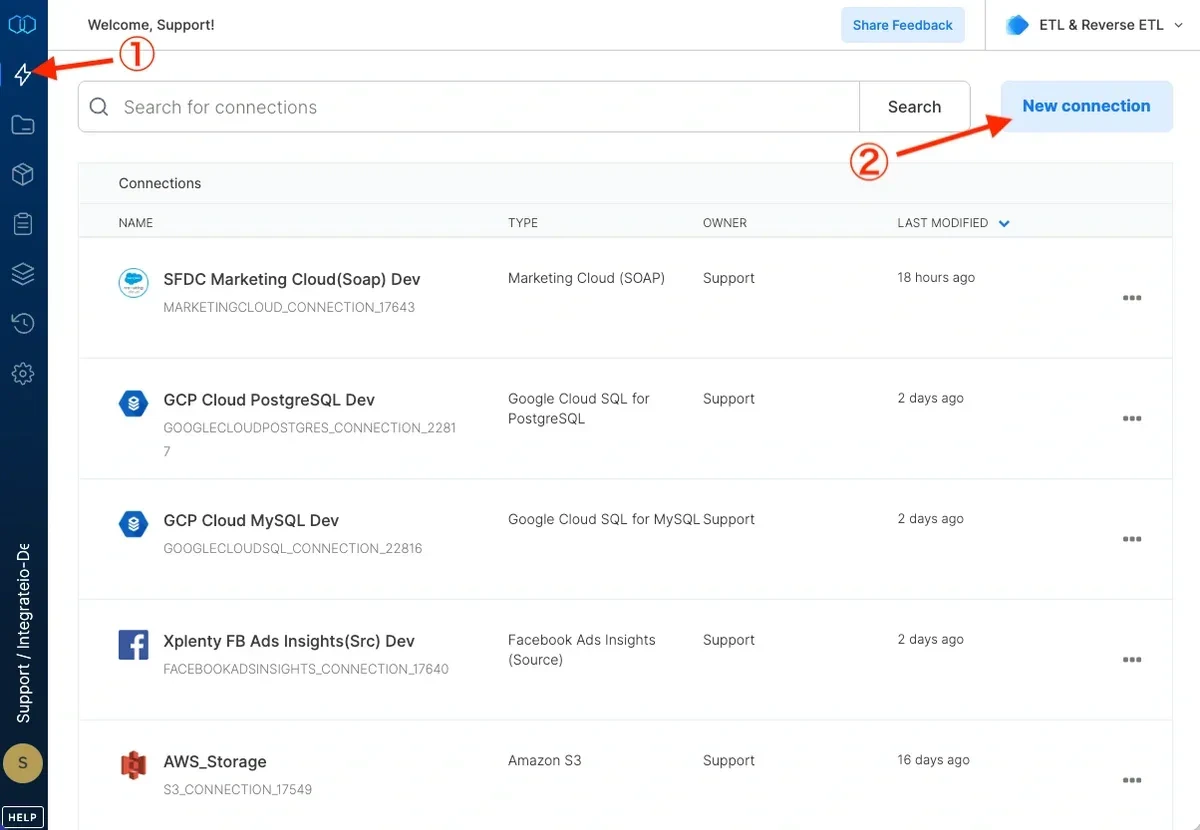
Click the **Connections** icon (lightning bolt) on the top left menu.
To create a connection, click **New connection**.
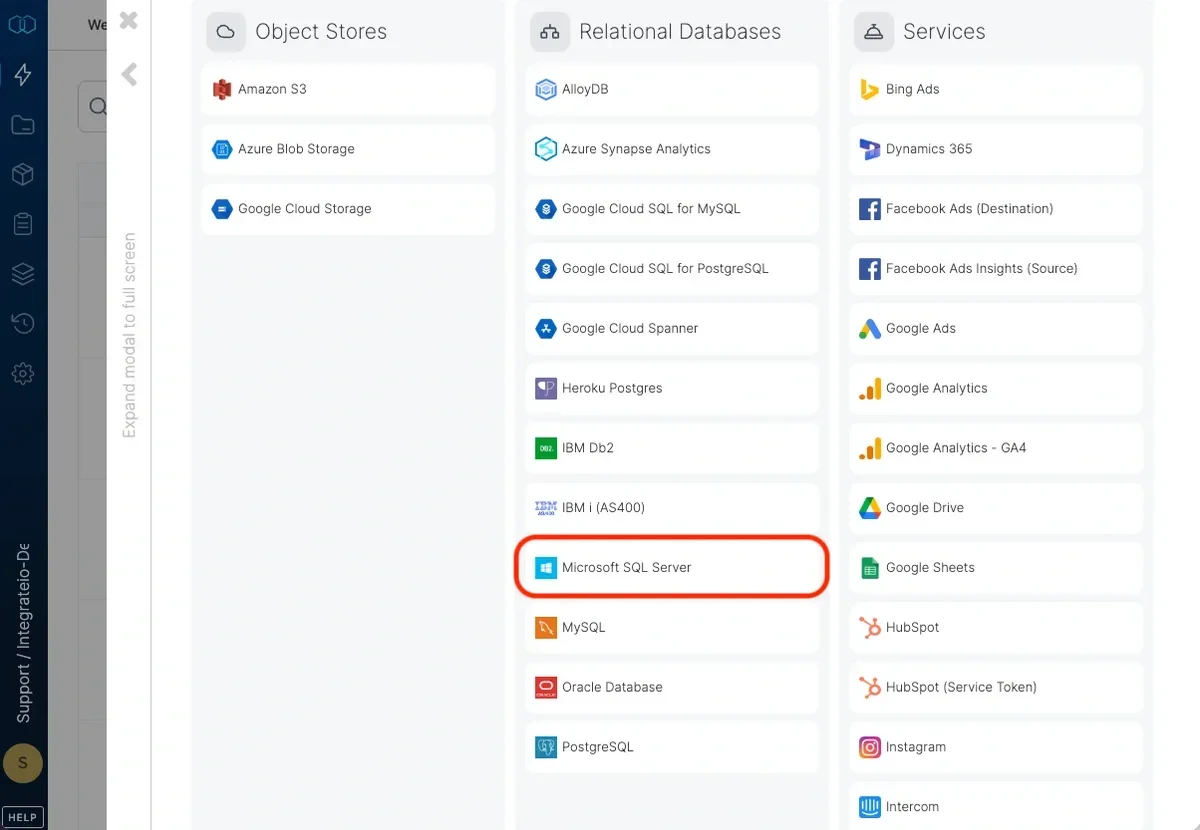
 Select SQL Server and name the connection.
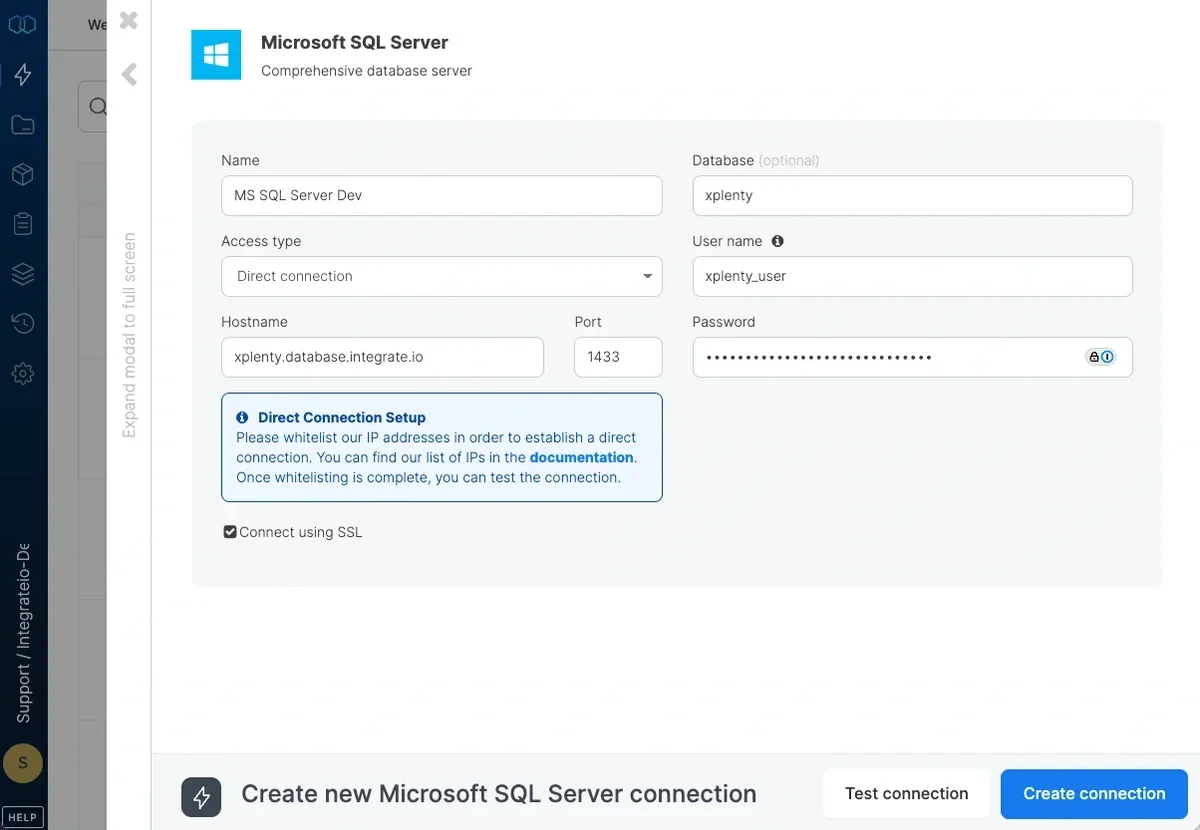
 Select your access type (direct connection if you've whitelisted Integrate.io ETL's IP addresses.)
Enter your SQL Server database server name as the hostname.
Enter the database name.
Enter the user name. Use the pattern **user\@server\_name** as the user name.
Enter the user's password.
Click **Test Connection** to make sure the connection details are correct.
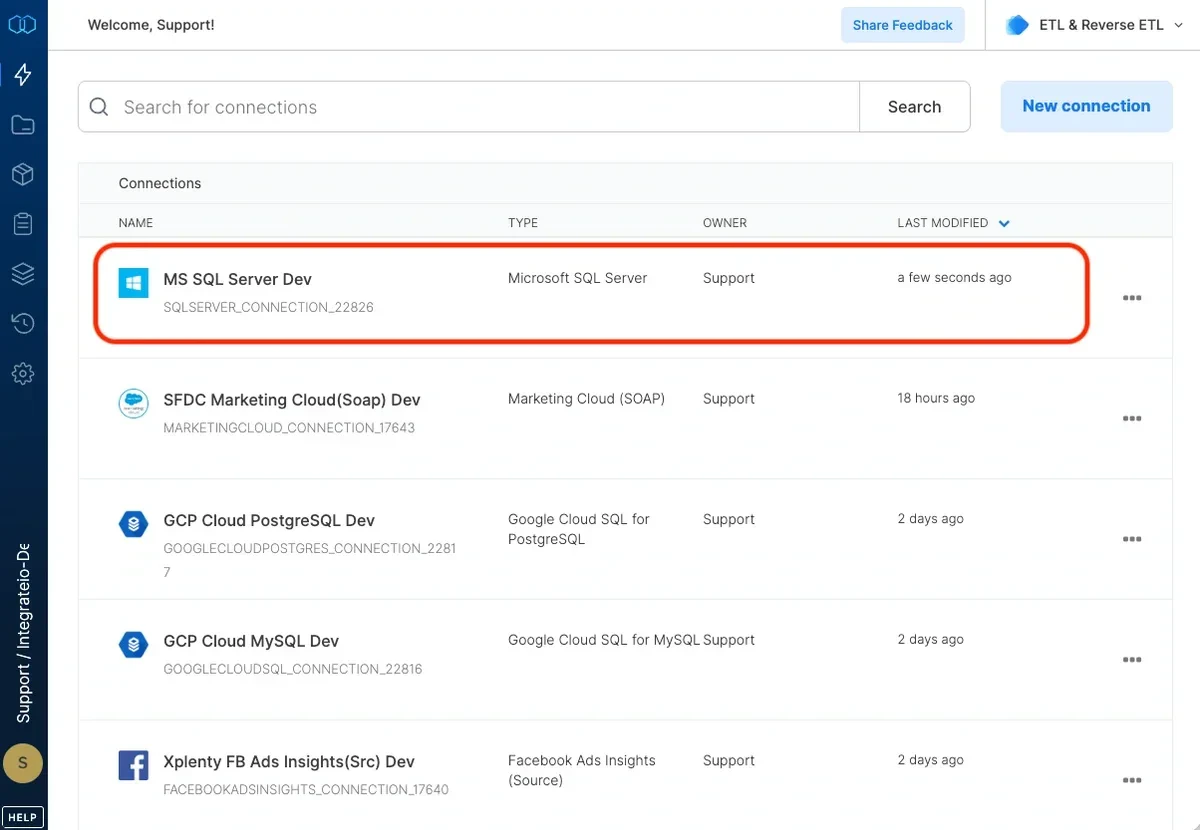
Click **Create connection** to create the connection.
Select your access type (direct connection if you've whitelisted Integrate.io ETL's IP addresses.)
Enter your SQL Server database server name as the hostname.
Enter the database name.
Enter the user name. Use the pattern **user\@server\_name** as the user name.
Enter the user's password.
Click **Test Connection** to make sure the connection details are correct.
Click **Create connection** to create the connection.