
"Our Salesforce team can now fully automate Salesforce data integration by building pipelines to prep and load data themselves. They don't need IT anymore, and they love it."

Adam Hooper
Head of Central Platforms, DPD UK
Sync fresh, modeled warehouse data back into Salesforce, HubSpot, NetSuite, and 100+ apps in minutes. No code, and no usage fees.
Trusted by 1,100+ data and ops teams saving millions of IT tickets with Integrate.io








Push modeled data into the CRMs, marketing, and support tools your teams already use.
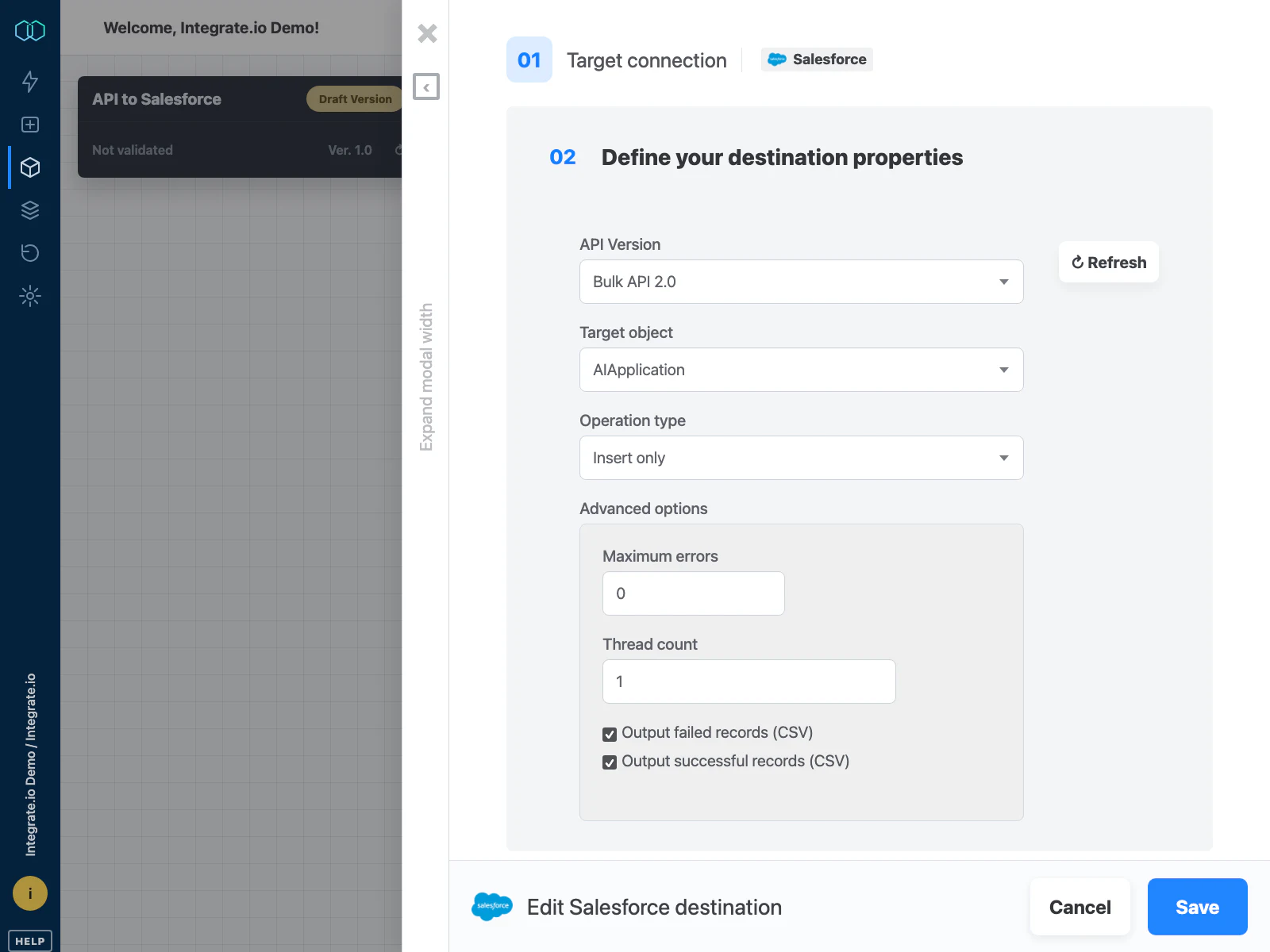

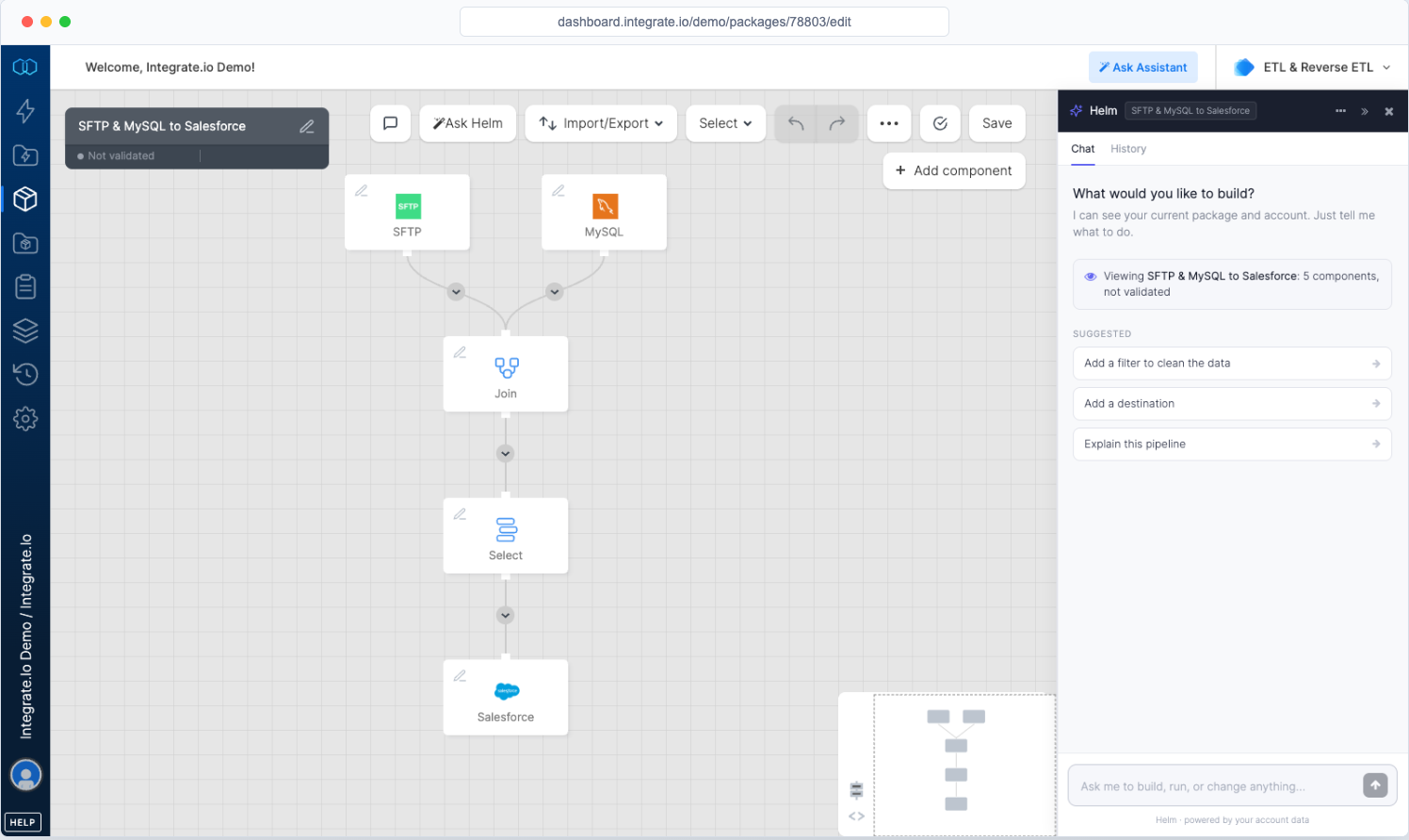
Query your warehouse directly and push results to any operational tool with visual field mapping.

Only changed rows get synced, minimizing API calls and keeping destination tools responsive.

Build segments from warehouse data and push them to ad platforms, CRMs, and marketing tools.

Sync unlimited rows and destinations for one price, without per-record usage fees.
See how data teams replace custom scripts with reliable, visual Reverse ETL pipelines.
Python scripts break when destination APIs change fields or rate limits.
No way to know which rows synced, failed, or were skipped.
Reverse ETL tools charge per synced row, making costs unpredictable.
Each destination requires a separate script with different auth and pagination logic.
No control over which warehouse data gets exposed to operational tools.
Managed connectors handle API changes automatically with built-in retry logic.
Row-level sync status, error logs, and alerting for every pipeline run.
Fixed-fee pricing covers unlimited rows, syncs, and destinations.
One visual canvas handles 100+ destinations with standardized authentication.
Row-level permissions and approval workflows keep sensitive data controlled.
Analysts, operators, and engineers can build the pipelines they need, while IT keeps access, standards, and visibility in place.
Predictable pricing for growing data work, without tying budget to every row, sync, connector, or client.
Build visually, prompt with Helm, or add SQL and Python when they help. Teams closest to the data can own the flow.
A dedicated Solution Engineer guides implementation and production work alongside 24/7 support.

Build field mappings, filters, and lookups with clicks.
Sub-hour schedules keep operational tools as current as the warehouse.

Unlimited rows, one price. No volume penalties.

SOC 2, HIPAA, row-level permissions, full audit trails.
Related Workflows
Start with the workflow closest to your use case, then connect it to the rest of your data delivery architecture.
Transform source data before loading it into its destination.
Load source data first, then transform it in the warehouse.
Capture source changes and keep systems current.
Standardize customer and partner files into reusable pipelines.
Shape raw data into BI-ready tables for analytics teams.
Keep Salesforce and your other systems in two-way sync.
“The Integrate.io Platform is a great ETL & Data Transformation Solution! Connecting Salesforce, Hubspot, Google Analytics, Facebook Ads, etc... has never been easier.”

Meir Gold
Growth | Analytics Manager
“Awesome ELT Tool. No code tool, easy to set up/use, nice schedules, price balance!”

Diego Polo
Business Intelligence Architect
“Best Customer Service Ever! They have been the best customer service team I have ever worked with from an outside vendor. Always very responsive, and go above and beyond to resolve issues or instruct on the product.”

Matthew Pratt
Analytics Manager
Book a 30-minute demo and watch us deliver your first sync before the call ends.
Talk to an ExpertFAQ
Clear answers to the questions teams ask when evaluating Integrate.io.
Still have questions?
Talk to an expert →Reverse ETL in Integrate.io means managed data workflows that connect sources, prepare data, monitor runs, and deliver trusted records to the systems that need them.
Strong Reverse ETL tools combine broad prebuilt connectors, visual and code-based transformations, monitoring and alerting, and clear access controls. Integrate.io delivers that as Reverse ETL software with fixed-fee pricing, so teams can scale without per-row or per-connector costs.
Integrate.io gives teams visual configuration, reusable connectors, scheduling, transformation steps, monitoring, and support for production Reverse ETL workflows.
Yes. Integrate.io supports SaaS apps, databases, file stores, APIs, warehouses, and custom endpoints so Reverse ETL workflows can span the full data stack.
Most Reverse ETL workflows can be built without custom code. Technical teams can still add advanced configuration when a pipeline needs custom logic or API-specific handling.
Integrate.io uses fixed-fee pricing so teams can plan Reverse ETL workloads without tying budget to every row, task, sync, or connector.