
"Our Salesforce team can now fully automate Salesforce data integration by building pipelines to prep and load data themselves. They don't need IT anymore, and they love it."

Adam Hooper
Head of Central Platforms, DPD UK
Build and maintain pipelines with a low-code or code-based approach for the full developer experience. Keep control when you need it, or set guardrails so ops and data teams can take over routine maintenance.
Trusted by 1,100+ data and ops teams saving millions of IT tickets with Integrate.io








Engineering teams need source control, version history, and reliable runtime behavior. They also need a clean handoff once another team is ready to maintain it.
Connector fixes, schema changes, and one-off requests can pull engineers away from the systems customers use.
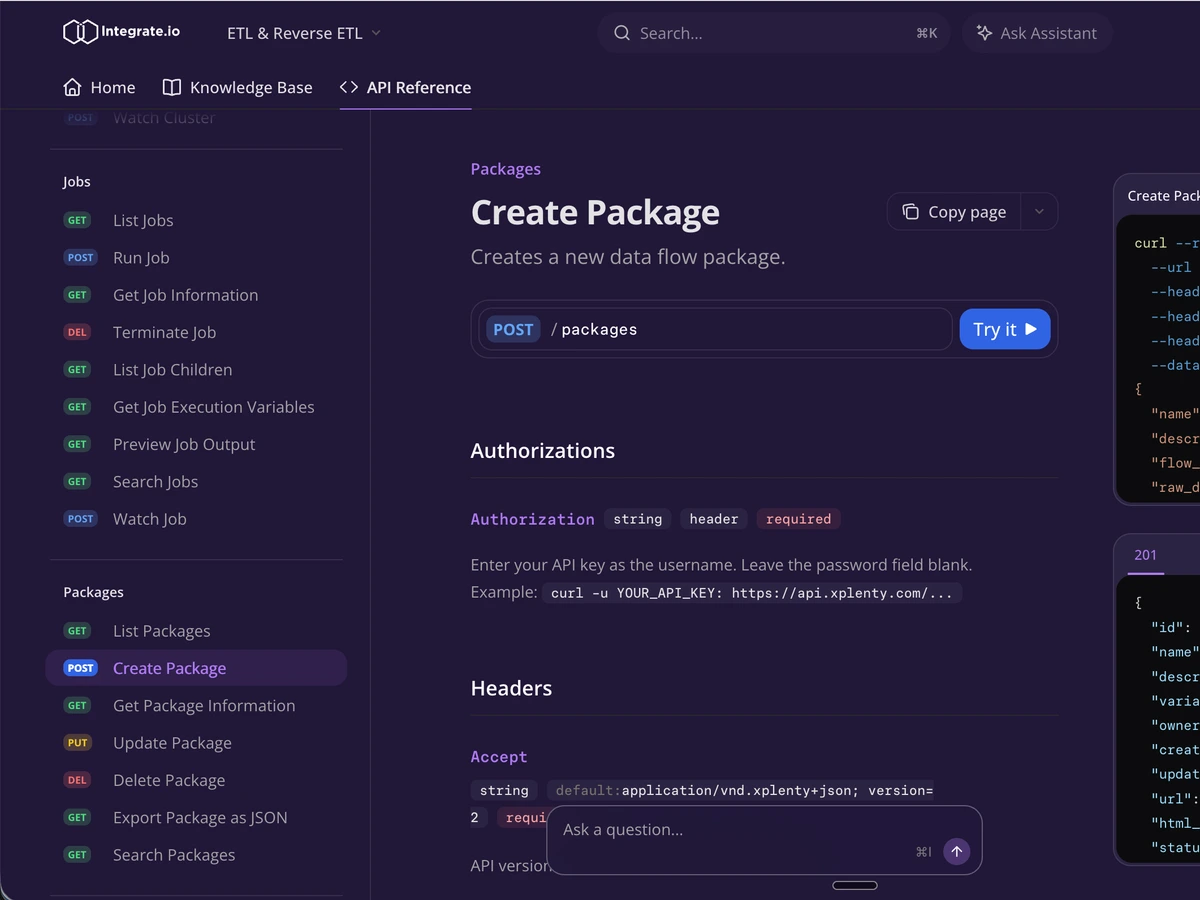
Some pipelines belong in low-code. Others need CI/CD configuration, JSON package export, Python, MCP, or APIs.
Ops and data teams can own routine maintenance when permissions, reviews, source control, and rollback paths are clear.
Use the interface, CI/CD configuration, JSON package export, Python, MCP, or APIs. Then move ownership to ops or data teams with the guardrails your team sets.
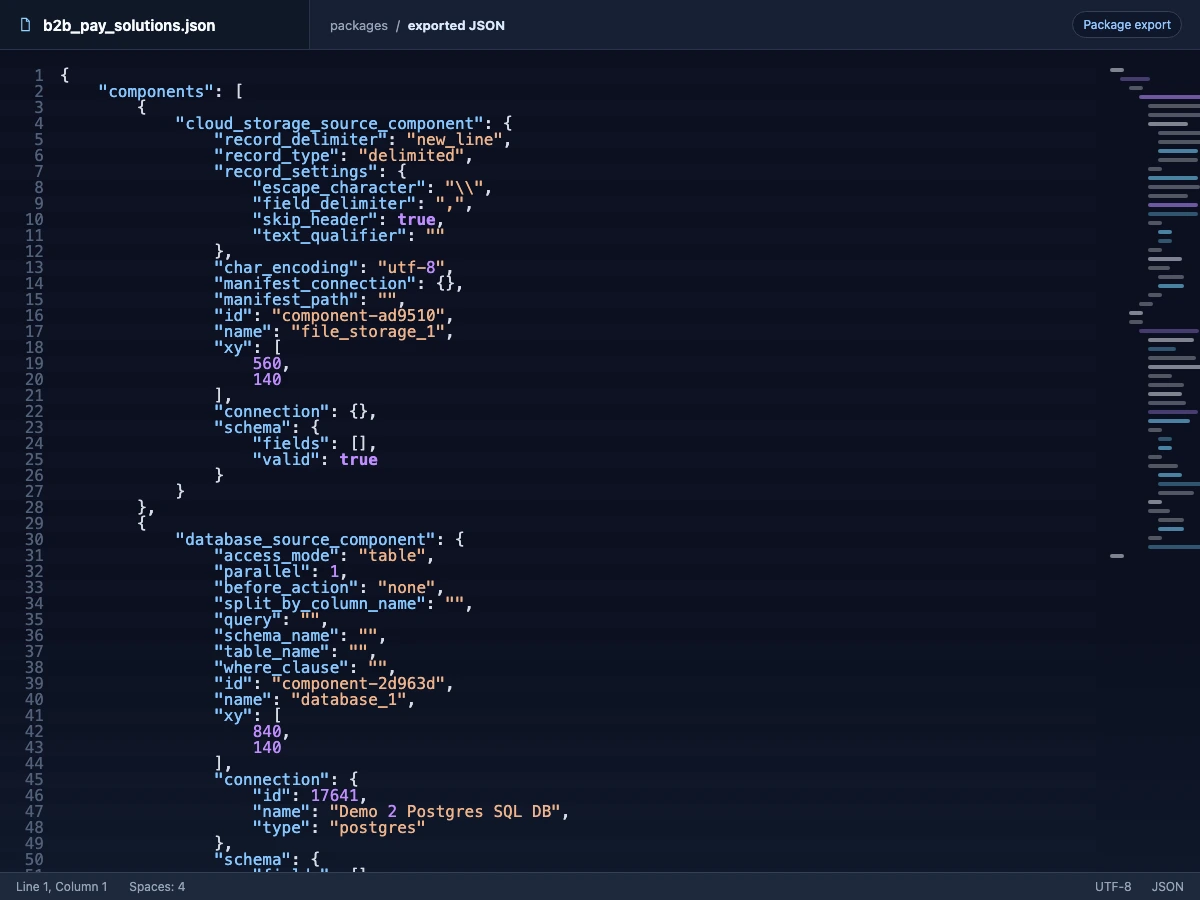

Use low-code design for common flows, Python for custom logic, JSON package export for review, and APIs when your systems need to drive the work.

Keep pipeline changes in source control, review versions before release, and promote updates through the workflow your team already trusts.

Let agents and internal tools create, inspect, run, and monitor pipelines without leaving the developer workflow.

Give ops or data teams ownership of routine changes while engineering controls access, review paths, version history, and rollback.
Analysts, operators, and engineers can build the pipelines they need, while IT keeps access, standards, and visibility in place.
Predictable pricing for growing data work, without tying budget to every row, sync, connector, or client.
Build visually, prompt with Helm, or add SQL and Python when they help. Teams closest to the data can own the flow.
A dedicated Solution Engineer guides implementation and production work alongside 24/7 support.
Use Integrate.io as the end-to-end data pipeline platform for data management, or plug its modular components into the stack your team already prefers.
“The Integrate.io Platform is a great ETL & Data Transformation Solution! Connecting Salesforce, Hubspot, Google Analytics, Facebook Ads, etc... has never been easier.”

Meir Gold
Growth | Analytics Manager
“Awesome ELT Tool. No code tool, easy to set up/use, nice schedules, price balance!”

Diego Polo
Business Intelligence Architect
“Best Customer Service Ever! They have been the best customer service team I have ever worked with from an outside vendor. Always very responsive, and go above and beyond to resolve issues or instruct on the product.”

Matthew Pratt
Analytics Manager
Managed sources and destinations, a universal API connector for custom systems, and new connectors built on demand within 24 to 48 hours.
Book a 30-minute demo and see how Integrate.io gives engineering teams code-optional control, source control, and a clean handoff path.
Talk to an ExpertFAQ
Clear answers to the questions teams ask when evaluating Integrate.io.
Still have questions?
Talk to an expert →Integrate.io helps Engineering Teams teams connect source systems, transform data, monitor pipelines, and deliver trusted records to warehouses, applications, and reporting tools.
Engineering Teams workflows can connect SaaS applications, databases, files, APIs, warehouses, and operational tools through Integrate.io connectors and API options.
Yes. Visual pipeline building, managed connectors, and reusable templates help Engineering Teams teams move faster while engineering keeps oversight where it matters.
Integrate.io supports scheduling, retries, alerts, logs, schema handling, and operational monitoring so teams can find and fix pipeline issues quickly.
Start by choosing the source systems, destination, refresh frequency, required transformations, and success metric. Integrate.io can then map the fastest path to a production-ready workflow.