Sync LinkedIn Data to MongoDB Atlas in Minutes

LinkedIn is a business and employment-oriented social network that allows users to build profiles, connect with others, and share relevant information.
A cloud MongoDB service built for developers who want to spend more time building apps and less time managing databases. Compatible with Amazon AWS, Microsoft Azure, and Google Cloud Platform.
Extract data from and load data into Salesforce to create your Customer 360 view.
Load and transform data in the Snowflake data cloud for analytics.
Connect to PostgreSQL databases for real-time data replication.
Move files securely to and from SFTP servers.
Replicate MySQL databases with CDC and scheduled sync support.
Load and transform data in Google BigQuery for analytics.
Sync data to and from Amazon Redshift data warehouse.
Connect Oracle NetSuite ERP data with your entire stack.
Replicate Microsoft SQL Server data for analytics and operational workflows.
Sync HubSpot CRM data bidirectionally with your data warehouse.
Connect to custom REST API endpoints with flexible source and destination support.
Load and extract files from Amazon S3 buckets.
Replicate MongoDB collections with real-time change data capture.
Connect Oracle databases to your warehouse, lakehouse, and operational stack.
Integrate Microsoft Dynamics 365 CRM and ERP data.
Move IBM Db2 database data into the systems your teams rely on.
Read from and write to Google Sheets as a source or destination.
Load and extract files from Azure Blob Storage containers.
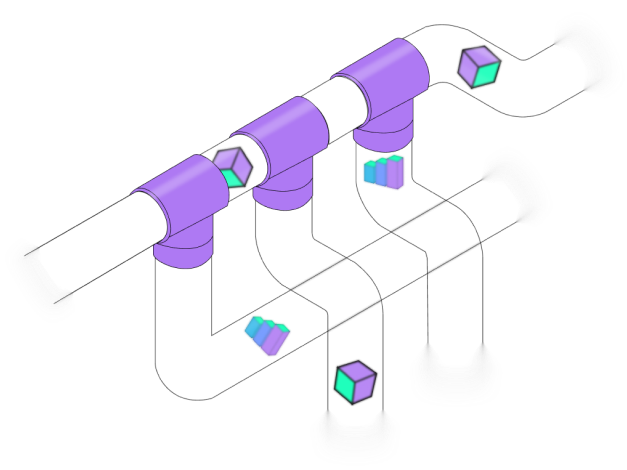
Connect LinkedIn to MongoDB Atlas and 200+ other platforms in minutes.
Book a DemoFAQ
Clear answers to the questions teams ask when evaluating Integrate.io.
Still have questions?
Book a Demo →Yes. Integrate.io helps teams build managed pipelines that move LinkedIn data into MongoDB Atlas for analytics, operations, and reporting workflows.
The available LinkedIn data depends on the connector, authentication, API permissions, and objects selected. Integrate.io helps map that data into MongoDB Atlas fields and tables.
Yes. Integrate.io supports mapping, filtering, joins, enrichment, scheduling, monitoring, and error handling before LinkedIn data reaches MongoDB Atlas.
Refresh timing depends on source limits, destination capacity, data volume, and business requirements. Teams can configure schedules that keep MongoDB Atlas updated from LinkedIn.
Most LinkedIn to MongoDB Atlas pipelines can be configured visually in Integrate.io. Teams can add advanced logic when the integration requires API-specific handling or custom transformations.
Start with a scoped LinkedIn sync, confirm field mapping and row counts in MongoDB Atlas, review pipeline logs, then schedule the production workflow once the data matches expectations.
We use essential cookies to run this website. With your consent, we also use cookies for analytics, advertising, social media and features like chat. You can change your choice at any time in Cookie Preferences. Read our Cookie Policy