


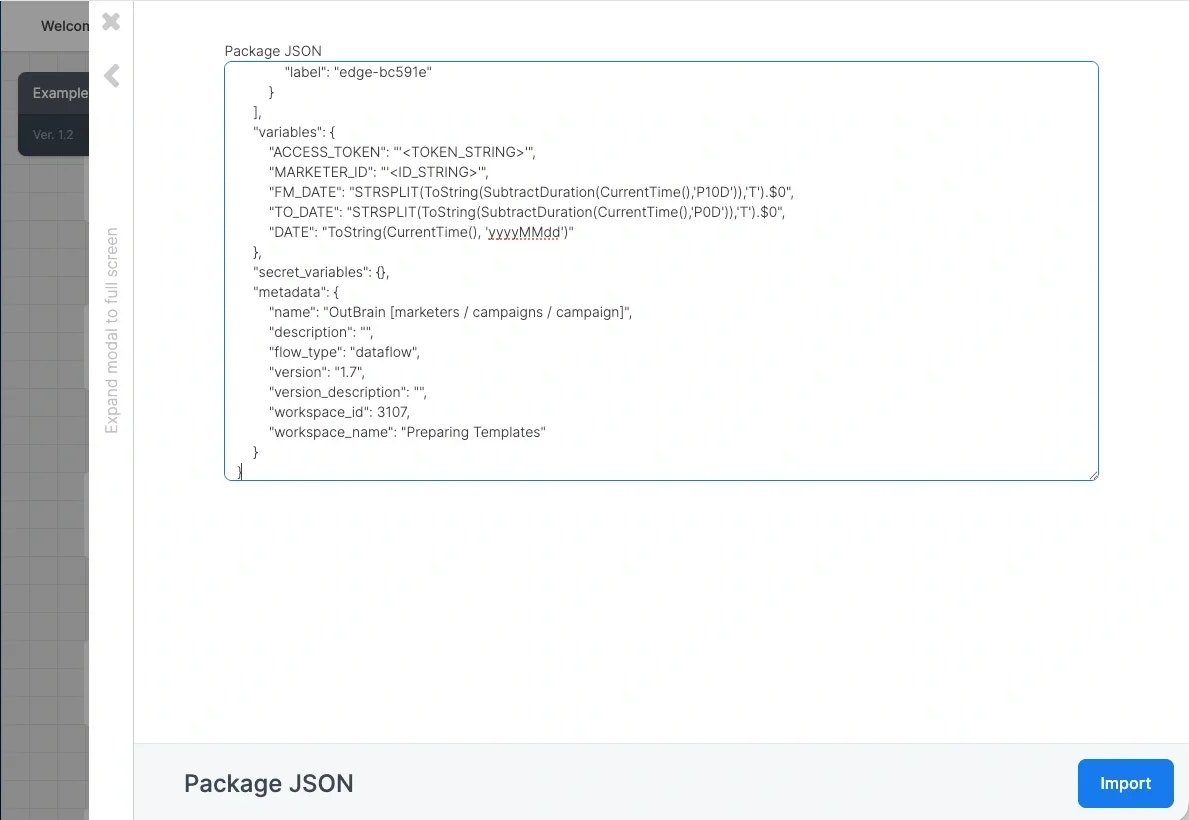
Secret variables and package variables on import
The exported JSON never contains the values of secret variables. Each secret value is replaced with the placeholderDUMMY_KEY.
When you import JSON into a package, Integrate.io ETL handles variables as follows:
This lets you import the same JSON into development, QA, and production accounts without overwriting each account’s credentials.
Import with the API
You can also import package JSON with the Create Package (POST /packages) and Update Package (PUT /packages/{package_id}) API endpoints. The API follows the same secret variable rules as the dashboard, with these additions:
missing_secret_variables: The response lists the names of secrets that the JSON referenced but the target package has no value for. The field appears only when at least one secret is missing.preserve_target_variables=true: Add this query parameter to an Update Package request to keep the target package’s existing package variable values. Variables that are new in the JSON are added, and no variables are removed. Without the parameter, the JSON replaces the package variables.- Removing secrets: To delete a secret, send its key with a
nullvalue, for example{"secret_variables": {"api_token": null}}. Sending"secret_variables": nullfor the whole field returns a422error instead of deleting every secret.
Who can use Import/Export
Import and Export work when both of these are true:
Package group scope still applies. You can export or import only the packages in the package groups your role covers. A separate Import/Export permission does not exist: the package Update permission is what allows it.